Monday, 14 September 2026


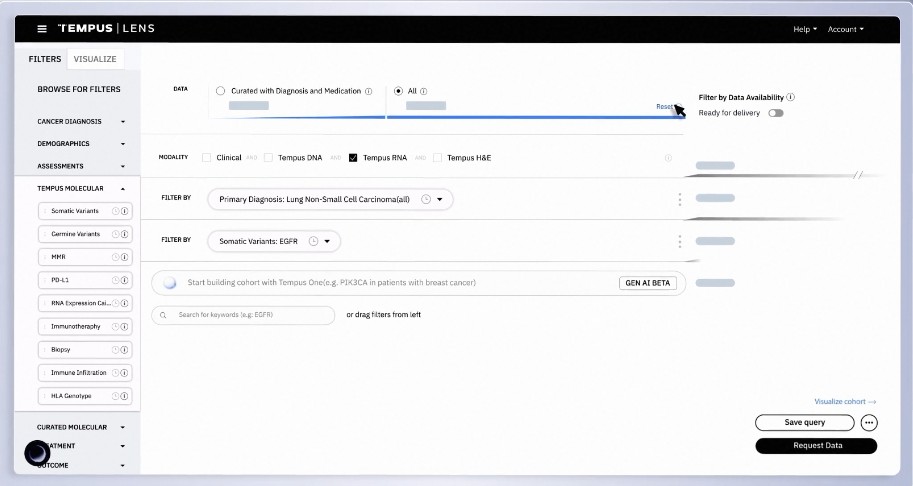
Image source: Public Domain
Tempus AI, Inc.announced an initiative to build a research platform containing 100,000 whole genomes linked to longitudinal clinical information over the next several years. The effort will create the first de-identified multimodal whole-genome sequencing (WGS) dataset built around disease populations and patient outcomes, specifically optimized for AI-driven research. Once this dataset is complete, Tempus plans to expand the effort with the goal of reaching one million genomes.
Existing population-scale genome programs are largely drawn from general populations and are not designed to link genomic data with longitudinal disease and treatment outcomes. Tempus has established one of the largest multimodal real-world oncology databases and used it to enhance hundreds of drug development decisions. The company has also spent years structuring this data specifically for AI-derived insights, building its own oncology foundation models and supporting model development for other leading AI innovators. Now, Tempus is expanding beyond targeted gene panels into WGS to create a deeper understanding of the role the genome plays in disease progression and treatment response, all toward the goal of improving patient outcomes.
The new WGS dataset will be integrated into Tempus’ existing de-identified multimodal data environment, where researchers can access genomic information alongside clinical histories, imaging, pathology and patient outcomes. Through Tempus Lens, researchers and model developers will be able to analyze the data and build and validate AI models without moving datasets between systems.
Unlike datasets designed primarily for traditional analysis, Tempus is building this resource specifically to pair whole-genome data with longitudinal information and a computational system for pre-training and post-training workflows. This creates a model-ready environment that can enable AI researchers to better understand disease and develop new AI-enabled insights.
“A large dataset is only valuable if you can turn it into insight,” said Eric Lefkofsky, Founder and CEO of Tempus. “Tempus has spent the last decade building the infrastructure to connect diagnostics, multimodal clinical data and AI at scale. Adding whole genome data linked to longitudinal outcomes makes that platform even more powerful and gives researchers a richer foundation to build AI models, generate new insights and ultimately improve patient care.”
Development of this research platform is already underway, and the initial dataset is available through Tempus' Early Adopter Program. Tempus will onboard additional members in waves as the dataset grows, with general availability planned for mid-2027.