Monday, 21 September 2026


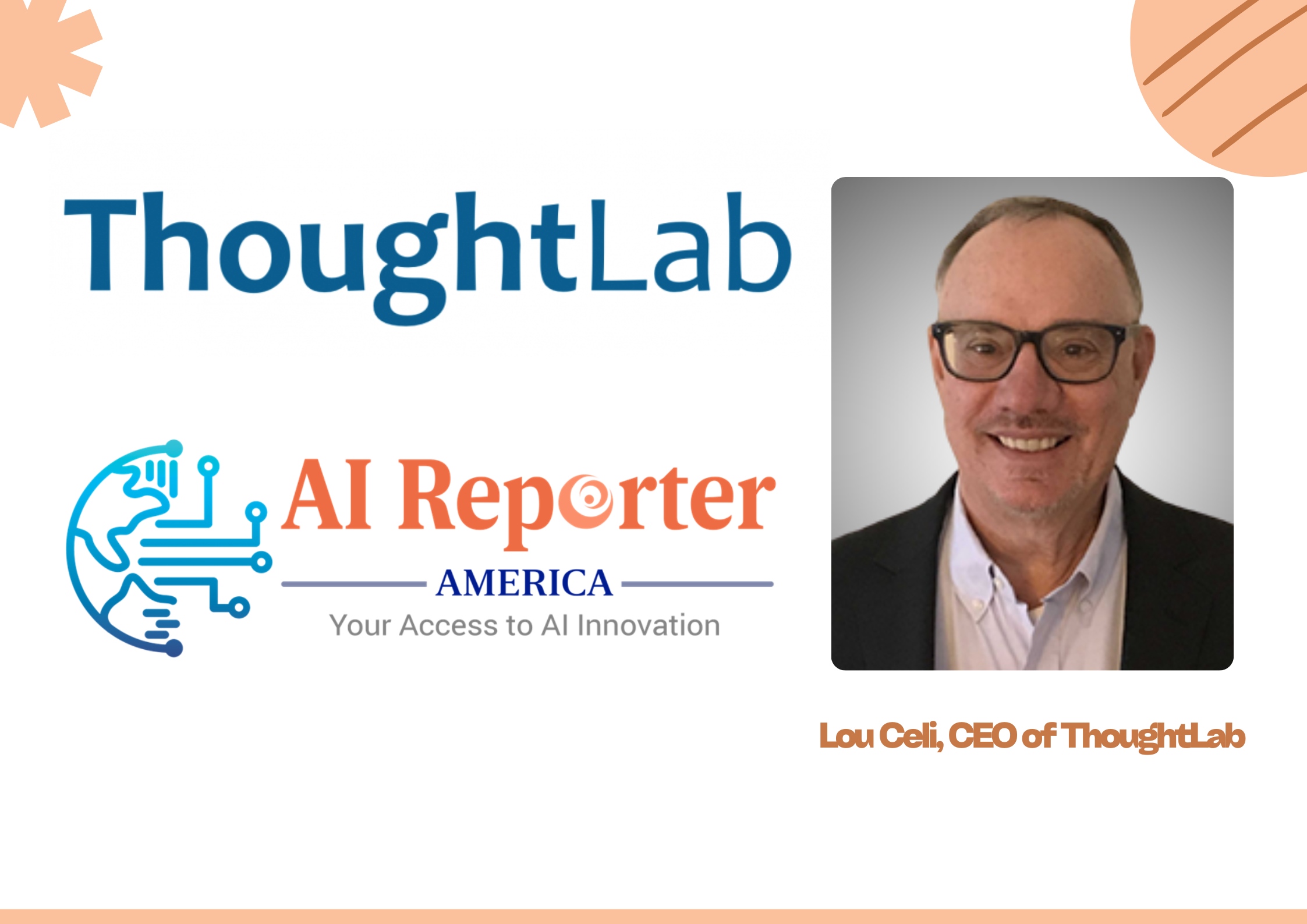
Image source: Public Domain
As artificial intelligence reshapes the future of urban development, city leaders are looking for practical strategies to move beyond isolated AI initiatives toward comprehensive, responsible transformation. To help address this need, ThoughtLab has developed Building an AI-First City, an evidence-based playbook that combines global benchmarking, AI maturity assessments, and real-world case studies to guide municipalities on their AI journey. In an exclusive conversation with AI Reporter America, Lou Celi, CEO of ThoughtLab discussed how the initiative is helping cities harness AI to enhance public services, strengthen governance, improve sustainability, and drive long-term economic and social outcomes while ensuring innovation is grounded in transparency, trust, and responsible AI practices.
1. What inspired the development of an evidence-based AI playbook for cities?
Since our research firm’s inception in 2015, ThoughtLab has been benchmarking smart city strategies every 18 months. In our latest cycle, AI clearly emerged as the issue most top of mind for urban leaders. Breakthroughs in generative, agentic, physical, and multimodal AI are reshaping how cities can manage infrastructure, deliver services, and engage residents, but the rapid pace and complexity of change have left many city leaders without a clear, trusted roadmap. At the same time, our prior work with 250 “future-ready” cities showed a growing gap between cities that are systematically using AI and data to address challenges, and those that are still experimenting in silos. At the same time, businesses, citizens, and students have rapidly adopted new AI tools, such as Chat GPT, Claude, and Gemini, widening the gap between cities and local businesses and residents.
That is why we set out to build an evidence-based AI playbook designed specifically for cities, not a generic treatise on AI. The playbook draws on a global survey of 200 cities, in-depth case studies, and an AI maturity model to codify what leading cities are doing differently—across governance, infrastructure, citizen experience, and funding—and to translate those insights into actionable guidance for peers. Our goal is to help cities harness AI to improve economic competitiveness, social outcomes, sustainability, and municipal services--while also responding to citizen concerns about privacy, employment, ethics, cybersecurity, and environmental impact through responsible AI policies and practices.
2. How will the benchmarking model help city leaders accelerate AI adoption?
The benchmarking model gives city leaders a way to see, in quantitative terms, where they stand on AI relative to their peers, and what specific practices are associated with better economic, social, and environmental outcomes. We are surveying 200 cities across regions—50 in North America, 50 in Europe, 45 in Asia-Pacific, 20 in Latin America, 20 in the Middle East, and 15 in Africa—capturing variation in population size, income level, economic development, density, citizen attidudes, and digital maturity. That dataset feeds into an AI maturity model and the AI Cities Barometer, which convert complex evidence into simple scores and dashboards across multiple pillars of AI strategy, adoption, and impact, with expert insights.
This allows cities to benchmark themselves against peer cities with similar demographics, concerns, and economic conditions to see how they compare in critical areas of AI deployment, such as AI governance, readiness of data and IT infrastructure, or AI-enabled public services, or data infrastructure. Leaders can then drill into the underlying study benchmarking results, case studies, and best practices to understand which concrete steps—such as creating an AI center of excellence, unifying data across departments, or launching citizen-facing conversational interfaces—have helped more advanced cities move the needle. By turning benchmarking into a decision-support tool, the model helps cities prioritize investments, build business cases, and accelerate responsible AI adoption with greater confidence.
3. What differentiates this AI playbook from existing smart city frameworks?
Most smart city frameworks focus broadly on digital transformation, IoT, connectivity, and data-driven governance; our AI playbook goes much further by making AI itself the organizing principle. First, it is explicitly designed around AI excellence in cities: we assess progress across seven dimensions of AI best practices for cities: (1) Create an AI vision, plan, and outcome-driven approach; (2) Build rigorous AI governance and data security; (3) Install an AI-ready foundation and ecosystem; (4) Reimagine citizen experiences; (5) prepare for the future of work; (6) Take AI solutions to the next level; and (7) Develop a clear partnership and funding path.
Second, the playbook examines AI strategies, plans, and impacts in seven key urban domains, including government management, safety and resilience, living and health, mobility and transportation, infrastructure and utilities, sustainability and environment, and economy and business. This is the first AI playbook to analyze AI trends and plans to this level of specificity by urban domain.
Third, it integrates the latest wave of AI technologies—generative, agentic, physical, sovereign, and multimodal AI—with adjacent technologies such as digital twins, cloud platforms, IoT, and modern data center infrastructure, reflecting the realities of the “Agentic AI Age” rather than traditional smart city thinking.
Finally, ThoughtLab is taking a mixed-methods approach, which blends a number of research methodologies, including a proprietary benchmarking survey of 200 countries; a curated repository of AI strategy papers and plans published by hundreds of cities; peer group interchange and views of AI experts across government, business, and academia; AI case studies of a diverse group of cities; and AI-driven sentiment analysis. Unlike other high-level frameworks, the playbook is anchored in a global evidence base and actionable insights from a broad coalition of mayors, CIOs, chief data officers, academics, and industry partners, who help validate findings and ensure they are practical for implementation.
4. How do you ensure the benchmarking model reflects the diverse needs of cities worldwide?
Diversity is built into both our research design and our analytical tools. We are deliberately sampling cities that vary by geography, population, income, economic structure, density, citizen attitude, regulatory conditions, and digital maturity, including cities that are often underrepresented in global publications but are making important strides in AI innovation. By segmenting results by region, city size, income level, and other attributes, the benchmarking model enables meaningful “apples-to-apples” comparisons that respect local conditions rather than forcing every city into a single global template.
At the same time, we recognize that AI best practices will manifest differently in, say, a mega-city struggling with congestion and air quality versus a smaller city focused on economic diversification or rural connectivity. Our maturity framework therefore emphasizes principles—such as outcome-driven AI strategy, data interoperability, workforce skills, and citizen trust—that can be adapted to different contexts, and our case studies provide concrete examples from cities across regions and income levels. Through our advisory board of urban leaders, academics, and industry executives, we continuously test whether the benchmarks and guidance resonate with—and can be calibrated to—the diverse needs of cities worldwide.
5. How do you see AI reshaping urban governance and public services over the next decade?
Over the next decade, AI will fundamentally change how cities govern, plan, and deliver services—one of the biggest urban shifts in our lifetimes. On the efficiency side, AI will power intelligent traffic systems that optimize flows in real time, physical AI that inspects and maintains infrastructure, and predictive analytics that help cities anticipate problems before they become crises. Across public services, AI-driven platforms will enable more personalized healthcare, adaptive education, responsive emergency services, and more efficient waste and energy management, all coordinated through a kind of digital “urban brain” drawing on real-time data.
Residents will increasingly interact with their cities through multilingual conversational interfaces—at kiosks, transit hubs, websites, and mobile apps—that make it easier to navigate services, report issues, and participate in local decision-making. AI will also support urban sustainability by enabling detailed environmental monitoring, scenario simulations for climate resilience, and optimized use of energy and water resources. But this transformation raises serious concerns—around privacy, surveillance, algorithmic bias, job displacement, cybersecurity, data center location and resource use, and the risk of excluding certain communities. This study will focus on how cities address these issues through responsible AI governance, transparent policies, and inclusive stakeholder engagement.
6. What are the biggest barriers cities face in implementing responsible AI at scale?
Our prior city studies and recent conversations with urban leaders point to a cluster of barriers that stand in the way of scaling AI responsibly.
First, cities must protect citizen data—keeping personally identifiable information secure, anonymized where appropriate, and governed by clear rules on access, sharing, and use.
Second, there are real fears of job loss and displacement, both within municipal workforces and across local economies, which require proactive workforce strategies, reskilling programs, and education systems aligned with the AI era.
Third, the physical footprint of AI—from data centers to connectivity infrastructure—raises concerns about location, energy consumption, water use, and environmental impact, demanding forward-looking policies and sustainable infrastructure planning.
Fourth, many citizens and local stakeholders mistrust “big tech” and worry about opaque algorithms, black-box decision-making, and unequal benefits, making it essential for cities to assert sovereignty over data, establish robust regulatory oversight, and insist on transparency and accountability from partners.
Finally, misinformation and exaggerated fears about AI can fuel backlash; cities need sustained public communication, civic dialogue, and demonstration projects that clearly explain AI’s benefits, limitations, and the guardrails in place to protect residents.
7. How does this initiative support ThoughtLab's long-term vision for AI-driven urban transformation?
This initiative is a cornerstone of ThoughtLab’s long-term vision to help cities move from fragmented experimentation to comprehensive, AI-enabled transformation. We are not only assessing current strategies, investments, and performance outcomes; we are also collecting long-term AI plans and roadmaps from more than 200 cities, allowing us to identify emerging patterns and future pathways for AI adoption. Our economists and AI specialists are expanding and enriching last year’s AI Cities Maturity Model and barometer to reflect new forms of AI and to provide an analytical foundation for an “intelligence” platform that supports ongoing decision-making through tailored analysis and data.
In parallel, we are convening a coalition of urban leaders, technology firms, academics, and civic organizations to co-create a shared vision of the AI-enabled city of the future and to ensure that our research translates into practical tools: an AI playbook, benchmarking database, case studies, a maturity model, and the AI City Barometer and Navigator. By making the findings broadly available at no cost to city leaders, and by equipping sponsors and partners with rich analytical assets, we aim to catalyze a global community of practice around responsible, high-impact urban AI. Ultimately, the initiative is about helping cities harness AI to deliver better outcomes for citizens and businesses—more livable, resilient, inclusive, and economically vibrant urban environments—while managing the risks with foresight and integrity.