Tuesday, 13 October 2026


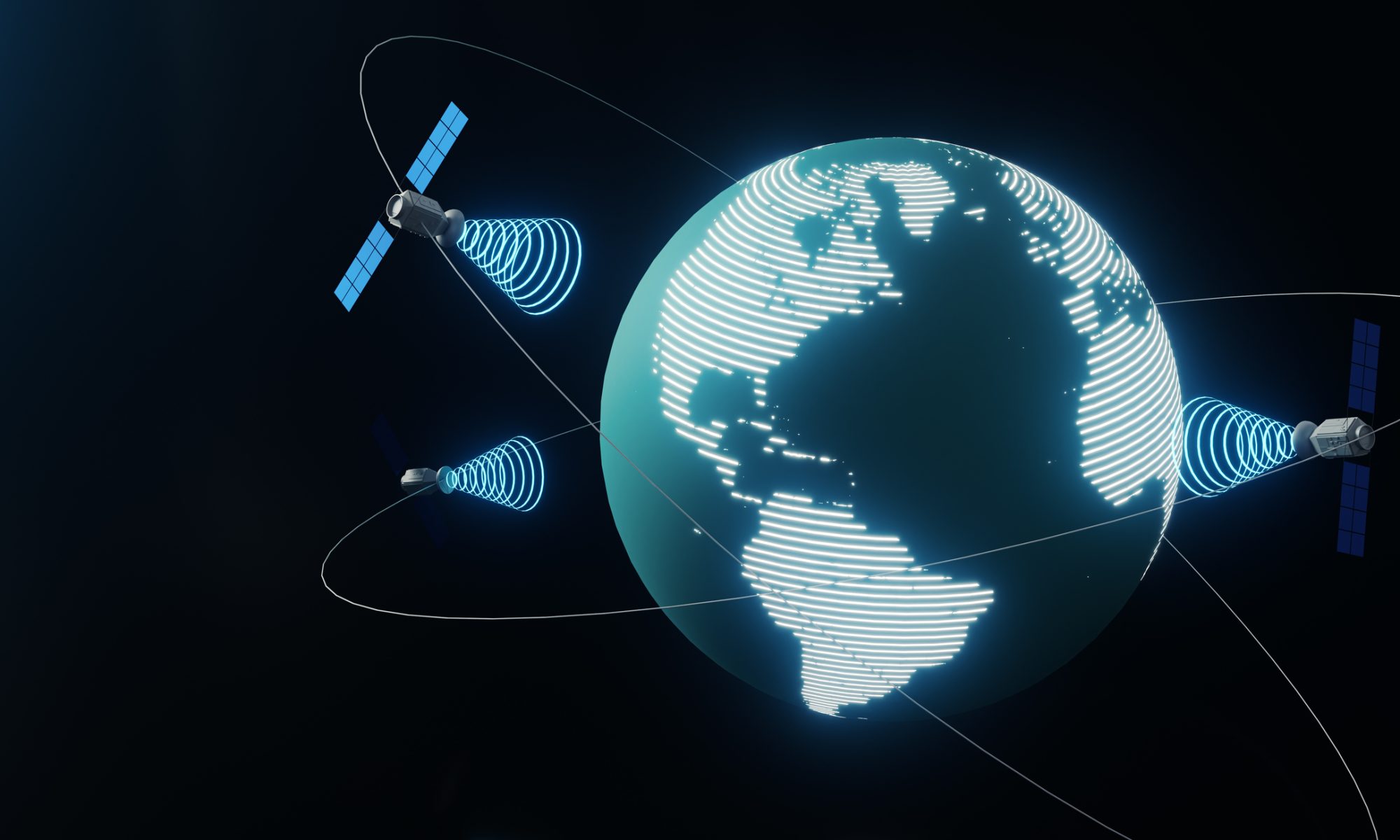
Image source: Public Domain
PowerBank Corporation ("PowerBank" or the "Company"), a leader in North American energy infrastructure development and asset ownership, provides a milestone update on its collaboration with Smartlink AI ("Orbit AI") following the successful December 10, 2025 launch of the DeStarlink Genesis-1 satellite, announced by PowerBank here. The satellite has been recorded operating and producing solar power as it moves around the earth.
Dr. Richard Lu, CEO of PowerBank, commented: "The successful deployment of Genesis-1 validates a vision we announced just weeks ago—that solar-powered infrastructure can extend beyond Earth's surface to power the next generation of computing. This isn't just about launching a satellite; it's about proving that clean energy technology can enable entirely new categories of digital infrastructure. The Orbital Cloud represents the convergence of three megatrends: renewable energy, artificial intelligence, and decentralized computing. PowerBank's planned role in advancing solar and thermal control solutions for space-based data centers positions us uniquely at this intersection, opening exposure to markets projected to exceed $700 billion over the next decade."
Mission Accomplished: Genesis-1 Reaches Low-Earth Orbit
On December 10, 2025, Orbit AI successfully deployed the DeStarlink Genesis-1 satellite into low-Earth orbit (LEO), marking the inaugural launch of the Orbital Cloud network. Genesis-1 represents the first satellite in a planned constellation designed to integrate three critical capabilities in space:
The satellite's successful deployment validates the core technical architecture of the Orbital Cloud and establishes the foundation for expanded constellation deployment beginning in 2026. Genesis-1 carries initial AI inference payloads and blockchain verification capabilities, demonstrating the feasibility of autonomous, solar-powered computation beyond terrestrial infrastructure constraints.
From Announcement to Achievement: Accelerated Timeline Execution
PowerBank initially announced its collaboration with Orbit AI on November 19, 2025, outlining an ambitious vision for Orbit AI, with PowerBank's support, to launch solar-powered orbital computing infrastructure. Less than one month later, the Genesis-1 satellite reached orbit—a remarkably compressed timeline that demonstrates both Orbit AI's execution capabilities and the maturity of the underlying technology stack.
This rapid progression from announcement to deployment reflects careful pre-launch preparation and validates PowerBank's due diligence in selecting strategic partners. The Company's collaboration with Orbit AI is intended to encompass advanced solar energy systems and adaptive thermal control solutions—critical technologies that will become increasingly important as the constellation scales to larger, higher-compute satellites in subsequent deployment phases.
PowerBank's Strategic Position in the $700B+ Orbital Infrastructure Opportunity
The Orbital Cloud initiative positions PowerBank at the intersection of multiple high-growth markets converging in low-Earth orbit:
PowerBank's future contributions are expected to focus on the "Execution Layer" of these orbital systems—the solar power generation and adaptive thermal management technologies that enable continuous, autonomous operation.
This observation underscores the fundamental advantage of solar-powered orbital computing—continuous energy availability without atmospheric interference. PowerBank's expertise in advanced solar energy systems positions the Company to support this paradigm shift as computing infrastructure migrates beyond terrestrial constraints.
A core differentiator of the Orbital Cloud architecture is its solar-powered execution layer. Satellites are equipped with lightweight, space-grade solar panels that harvest continuous sunlight during orbit, enabling round-the-clock AI inference, blockchain node operation, and on-board data processing without reliance on terrestrial energy grids.
Constellation Expansion: Next Phase Development Timeline
With Genesis-1 successfully deployed, Orbit AI plans to expand its constellation through a phased approach:
PowerBank expects to continue as a key partner throughout these expansion phases, with its solar energy and thermal control contributions expected to become increasingly significant as satellite payloads scale to accommodate higher computational loads and more sophisticated AI inference capabilities. At this time PowerBank elected not to make an investment in Orbit AI and the terms of any remuneration for services PowerBank may provide Orbit AI have not yet been determined.