Monday, 12 October 2026

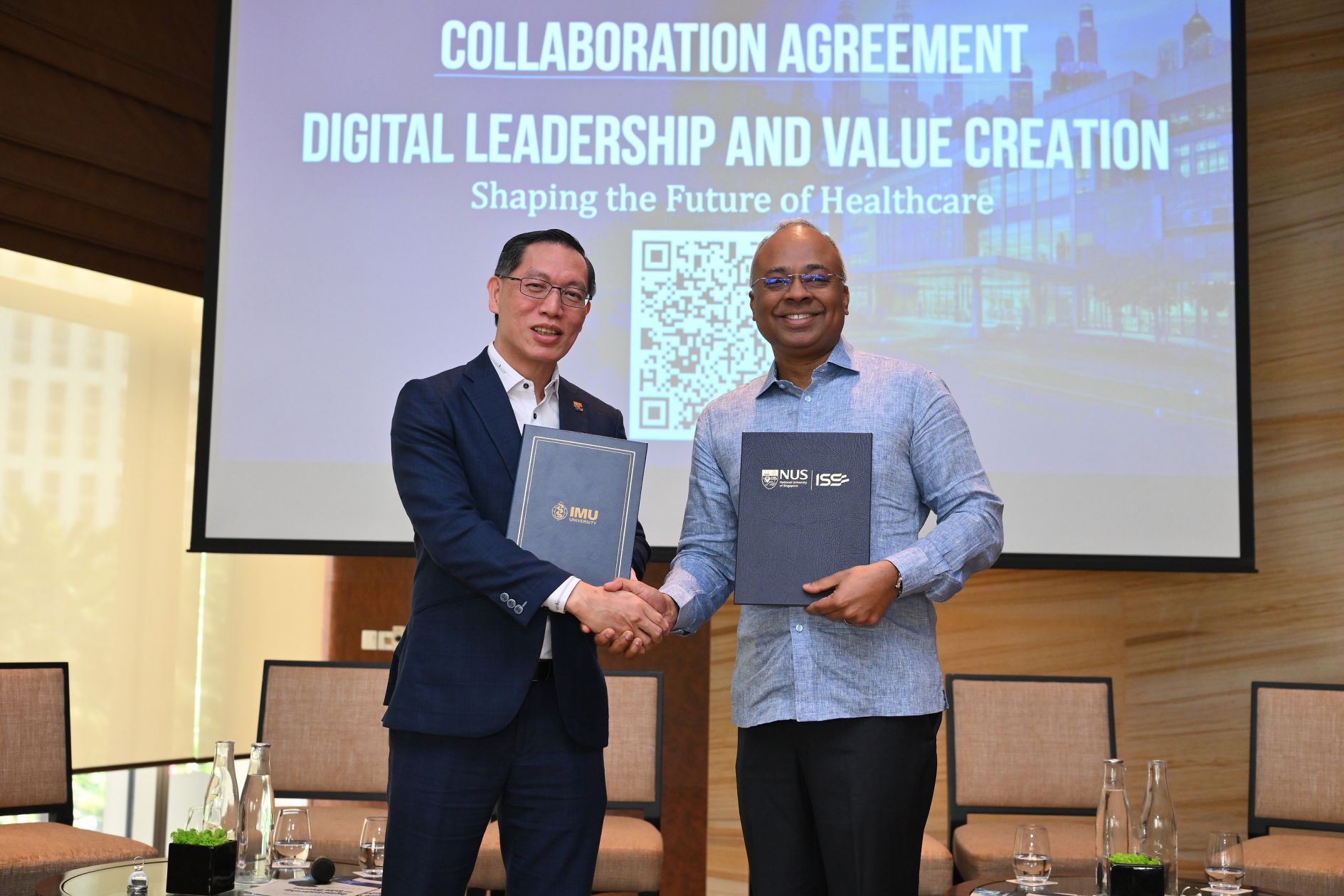
Image Courtesy: Public Domain
As healthcare systems across Asia accelerate investments in artificial intelligence (AI), digital platforms, and data-driven care, increasing attention is being placed on the leadership capabilities required to guide transformation and maximise value from these investments.
The discussion comes at a pivotal moment for Malaysia as the nation advances its AI agenda as a key driver of economic growth. With AI projected to contribute between RM13 billion and RM20 billion annually to GDP by 2030, Malaysia is accelerating AI adoption across strategic sectors, including healthcare, while strengthening governance and accountability frameworks. These efforts aim to position the country as a regional leader in trusted and responsible AI that delivers tangible economic and societal benefits.
Despite growing investments in AI-enabled diagnostics, predictive analytics, digital health platforms, and automation technologies, many healthcare organisations continue to struggle with scaling successful pilot projects into enterprise-wide transformation.
Against this backdrop, IMU University and NUS-ISS of the National University of Singapore (NUS) jointly organised the executive forum, "The New Mandate: Digital Leadership as a Leadership Capability - Navigating AI, Financial Stewardship, and Workforce Transformation for Healthcare Leaders", bringing together senior healthcare executives, hospital leaders, policymakers and industry stakeholders to discuss how healthcare organisations can move beyond AI experimentation and translate digital investments into sustainable, enterprise-wide value.
A key theme that emerged from the forum was that digital literacy is no longer merely a technical competency but a core leadership capability. Healthcare leaders are increasingly required to make complex decisions involving AI adoption, digital investments, workforce redesign, data governance, and financial sustainability. Participants also noted that healthcare systems across the region are facing mounting pressures, including workforce shortages, rising operating costs, ageing populations, and growing demand for healthcare services. In Malaysia, these challenges are further compounded by demographic shifts, the rising burden of chronic disease, and increasing complexity in care delivery. Together with escalating healthcare expenditure, these trends underscore the need for more efficient, data-driven models of care and operations.
Many organisations also faced difficulties aligning technology investments with long-term organisational priorities and value creation. Against this backdrop, participants discussed how healthcare organisations can move beyond fragmented technology initiatives towards more integrated, scalable, and sustainable transformation. Key priorities identified included:
Leadership, Not Technology, Defines Value Creation
Another key takeaway from the forum was that successful digital transformation depends as much on leadership as it does technology. While technology can be a powerful enabler, its impact is maximised only when supported by clear strategic direction, effective governance and organisational alignment.
As Professor Gerard George, Group Managing Director of IMU University, said in his welcome speech: "AI is not just a technology shift. It is a leadership challenge. Value will not be determined by investment levels, but by how well organisations align leadership, governance, workforce readiness, and execution. In healthcare, the real opportunity is to build systems that are digitally enabled, financially sustainable, and resilient at scale."
Mr Khoong Chan Meng, Chief Executive Officer of NUS-ISS, said: "Technology alone does not transform healthcare. What matters is the ability of leaders and organisations to turn innovation into meaningful outcomes. As healthcare systems become increasingly AI-enabled and data-driven, leaders must be able to align strategy, people, and operations to scale transformation effectively. Through this collaboration with IMU University, NUS-ISS looks forward to supporting healthcare leaders and professionals in building the capabilities needed to drive sustainable and digitally-enabled transformation across the industry."
At the forum, IMU University and NUS-ISS also signed a collaboration agreement reaffirming their shared commitment to strengthening leadership and workforce capabilities across the healthcare sector. Under the agreement, both institutions will co-develop and co-deliver the "Digital Leadership and Value Creation Programme", which will be offered by IMU University from September 2026.
Designed for senior healthcare leaders and executives, the programme will equip participants with practical frameworks and capabilities to lead digital transformation initiatives, align technology investments with organisational goals, and create sustainable value in an increasingly data-driven healthcare environment. Both institutions will also explore broader opportunities in executive education, leadership development, and industry-focused programmes to support healthcare organisations in strengthening digital readiness and building capabilities for sustainable transformation.
Building the Next Generation of Digital Health Leadership
As AI becomes a central pillar of Malaysia's economic strategy and healthcare systems face growing structural pressure, the ability to align strategy, governance and execution will increasingly determine which organisations successfully scale transformation and deliver lasting value.
Healthcare transformation is no longer primarily a technological agenda. It is leadership and organisational challenge. Through this collaboration, IMU University and NUS-ISS are committed to helping healthcare organisations build the leadership capabilities needed to navigate change and realise the full potential of digital innovation.