Wednesday, 07 October 2026

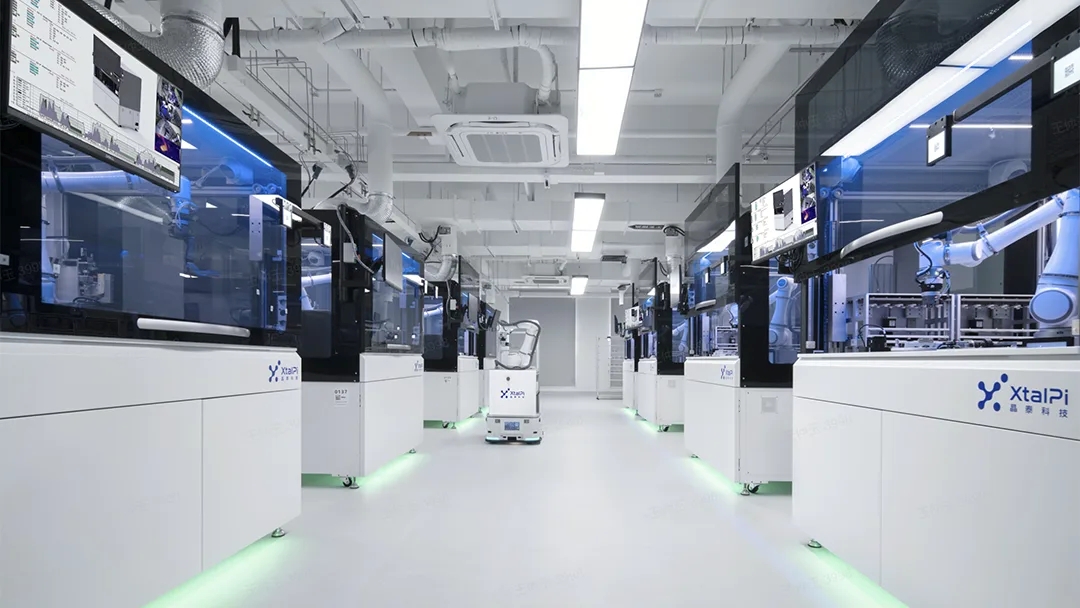
Image source: Public Domain
XtalPi, a global leading AI- and robotics-driven drug discovery platform, noted a key milestone in its collaboration with ReviR Therapeutics: dosing of the first participant in the Phase 1 clinical trial of RTX-117, an investigational small molecule being developed for Charcot-Marie-Tooth disease (CMT) and Vanishing White Matter disease (VWM). The candidate, discovered and optimized using XtalPi's AI + robotics platform alongside ReviR Therapeutics' VoyageR AI platform, has also received U.S. FDA Investigational New Drug (IND) clearance and Orphan Drug Designation (ODD) for CMT, enabling its clinical expansion into the U.S..
The Phase 1 study is a randomized, double-blind, placebo-controlled, dose-escalation trial carried out in China, designed to evaluate the safety, tolerability, pharmacokinetics (PK), and pharmacodynamics (PD) of RTX-117 in healthy participants, with the objective of supporting future studies in patients with CMT and VWM.
CMT affects approximately 1 in 2,500 people worldwide and is characterized by progressive peripheral neuropathy that can lead to muscle weakness, atrophy, and sensory loss, with some subtypes leading to high mortality rates. VWM is a rare, often fatal pediatric leukodystrophy associated with progressive neurological decline. Both conditions currently lack approved disease-modifying therapies, representing a significant unmet medical need.
RTX-117 is a small molecule discovered and developed using ReviR's proprietary VoyageR AI platform in collaboration with XtalPi's AI+robotics drug discovery engine. By leveraging deep insights into RNA biology and protein translation homeostasis, RTX-117 is designed to act on the Integrated Stress Response (ISR) pathway by activating eIF2B, a mechanism enabled by XtalPi's closed-loop AI+robotics R&D platform combining predictive AI models and quantum physics with high-throughput automated experiments. RTX-117's rapid progression from algorithmic design to clinical testing demonstrates the platform's ability to address complex neuralogical diseases with high unmet need. The initiation of the Phase 1 study represents a step toward evaluating the clinical potential of ISR modulation in these rare neurological disorders.
"RTX-117's progress exemplifies how AI-driven precision drug discovery overcomes traditional economic barriers in rare disease R&D," said Dr. Shuhao Wen, Chairman of XtalPi. "Our platform's ability to rapidly translate biological discoveries into clinical candidates opens new frontiers for patients and partners. "
"The initiation of dosing in our first-in-human study, coupled with the dual IND clearance in China, marks a transformative leap for ReviR Therapeutics," added Peng Yue, PhD, CEO of ReviR. "By leveraging our VoyageR AI platform and our integrated cross-border operations in the U.S. and China, we are accelerating the development of our small molecule pipelines designed to address critical gaps where no approved disease-modifying treatments exist."
XtalPi and ReviR are advancing multiple collaborative programs, aiming to systematically tackle rare diseases with high unmet need. The success of RTX-117 further validates the scalability and clinical impact of AI + robotics in expanding treatment options for underserved patient populations.